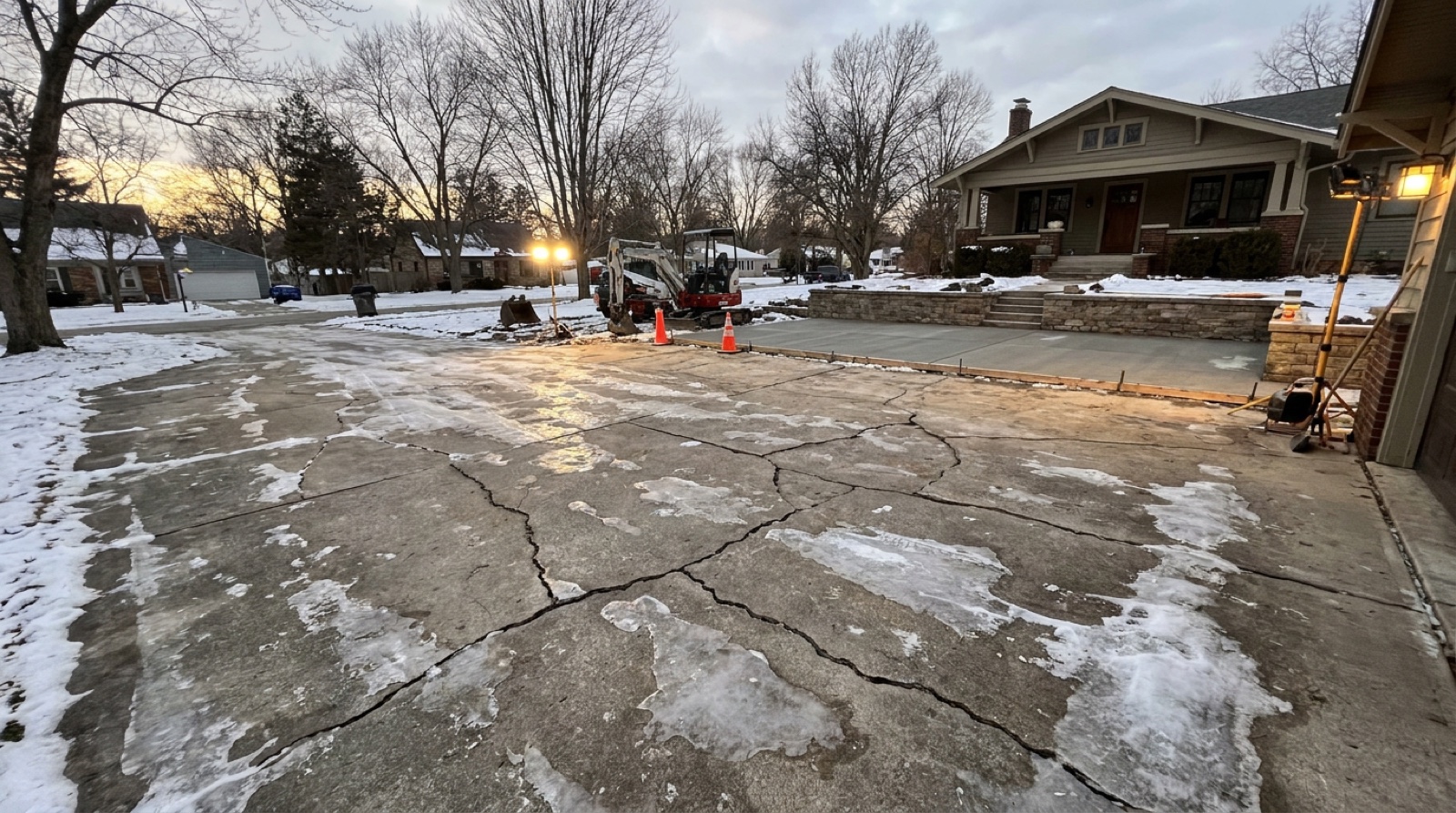
If you have an open crack, a spalled slab edge, or a downspout dumping water onto your driveway, deal with it in the next ten weeks. That window closes when overnight temperatures in the Miami Valley stop climbing back above freezing.
The reason this year is worth flagging: forecasters are watching a possible strong El Niño heading into the 2026-27 winter. The Columbus Dispatch laid out what that could mean for Ohio in an explainer published on August 3.
The honest read on that reporting is that nobody can promise a specific December in Dayton. El Niño shifts the jet stream, and its influence on North America shows up mainly in winter rather than late summer.
Why a Milder Winter Is Not Good News for Concrete
Most homeowners hear a warmer winter outlook and assume their driveway gets a break. Concrete does not work that way.
Slabs are not damaged by cold. They are damaged by water that soaks in, freezes, expands, and thaws again, over and over.
A winter that parks Dayton around 30 to 38 degrees with regular rain and wet snow produces far more of those cycles than a winter that simply stays frozen through February. Every cycle pries an existing crack a little wider.
What that damage looks like in spring
- Hairline cracks that widened into quarter inch gaps
- Flaking and pitting on the surface, usually worst near the garage apron
- Slabs that no longer sit flush at the joints
- Steps and walkway sections that heaved and now catch a toe
None of that is new to anyone who has owned a home in Kettering or Huber Heights for a decade. The point is that the damage is mostly preventable, and the prevention work has a deadline.
The Work That Has to Happen Before the Freeze
Sealants and patching materials need above freezing temperatures to cure properly, and most need dry conditions for a day or more on either side. That is why late summer and early fall are the practical window in Ohio.
| Timing | Task | Why it matters |
|---|---|---|
| August | Fix grading and downspout runoff | Stops water from pooling against slabs all winter |
| August to September | Repair cracks and spalled edges | Cures fully in warm, dry conditions |
| September to October | Reseal driveways and walkways | Keeps meltwater out of the surface pores |
| October to November | Replace failed slabs and sections | Last reliable pouring window before hard frost |
| Before first salt | Switch deicer if the slab is new | Protects concrete under one year old |
Start With Water, Not the Concrete
Sealing a slab that sits in a puddle is a waste of a weekend. Find out where the water goes first.
Walk the property during the next heavy rain. Look for downspouts discharging within a foot of the driveway, low spots that hold standing water, and soil that has settled below the slab edge.
If the ground slopes toward the house or toward a slab, that is the first thing to correct. On sloped lots around Beavercreek and Centerville, a properly built retaining wall often solves a drainage problem that no amount of surface repair will fix.
Repair Now Costs Less Than Repair in March
A crack sealed in September is a small job. The same crack after a winter of water intrusion often means removing and replacing the whole panel.
Fall is the cheapest time to handle crack filling, patching, and surface restoration because the material cures on schedule and crews are not fighting frozen ground. It is also easier to schedule than the March rush, when every contractor in the Dayton area is booked out.
If a section is already past saving, doing the demolition and haul away in October beats waiting until the subgrade is frozen solid.
What still gets poured this fall
Plenty. New driveway pours and walkway replacements run through late October and into November in most Ohio years, as long as the forecast gives the slab a few nights above freezing to gain strength.
Patios and porches are the same story. If you want a new patio slab ready for spring, booking it now is far more realistic than trying to squeeze it in during April.
One Note on Deicers
Any concrete poured this year should not see rock salt this winter. Fresh slabs need a full season to develop resistance to chloride damage.
Sand gives traction without attacking the surface. If you must use a chemical product, avoid anything containing ammonium sulfate or ammonium nitrate, which break down concrete directly.
A Reasonable Plan for the Next Ten Weeks
- Walk the property in the rain and note where water sits
- Photograph every crack wider than a pencil line
- Get the drainage corrected first
- Repair and seal in September
- Schedule any replacement pour before the end of October
Whether this winter turns out mild, wet, or ordinary, that list holds up. Nothing on it depends on the forecast being right.
If you want a straight assessment of what actually needs work before winter, get in touch for a quote and we will walk the property with you.