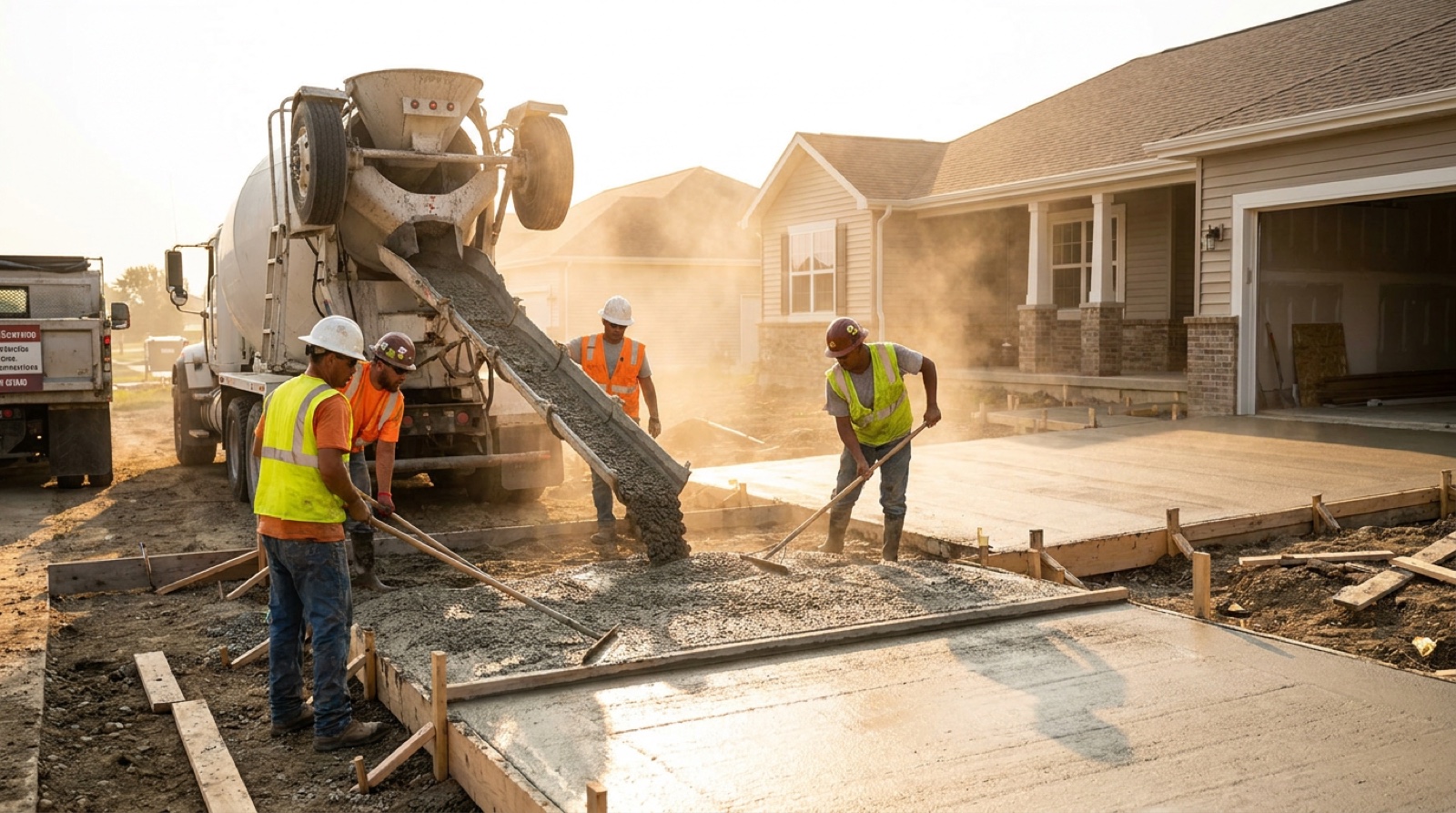
Heat is not a small detail when you pour concrete. It changes how the material sets, how strong it ends up, and how likely it is to crack.
WHIO reported that another heat wave moved into the Miami Valley this July, with highs climbing into the low 90s and Gulf moisture pushing humidity up across Dayton. Those are exactly the conditions that make summer concrete work tricky.
Why Hot Weather Speeds Everything Up
Concrete hardens through a chemical reaction called hydration. Heat accelerates that reaction, so the mix stiffens faster than a crew can always work it.
On a 92 degree afternoon in Kettering or Huber Heights, fresh concrete can start setting before it is fully finished. That leaves less time to screed, float, and trowel the surface.
The bigger problem is water loss. Hot air, direct sun, and a dry breeze pull moisture out of the slab quickly.
When concrete loses water too fast, it does not gain the strength it should. It also becomes far more likely to crack while it cures.
The Cracks You See in July
Two kinds of cracking show up in summer heat. Both are avoidable with the right approach.
- Plastic shrinkage cracks. These appear within hours as the surface dries faster than the concrete below it. They look like short, random tears across a fresh slab.
- Thermal cracks. A slab poured hot expands, then contracts as it cools overnight. Without proper joints, that movement has to go somewhere.
A driveway or patio that cracks in the first week rarely fixes itself. It usually means the pour or the curing was rushed.
How a Good Crew Adapts to the Heat
Experienced Dayton contractors do not simply pour and hope. They change the plan to match the forecast.
Timing is the first tool. Early morning pours avoid the worst of the afternoon sun and give the concrete a cooler window to set.
Crews also keep the subgrade and forms damp so the ground does not steal water from the mix. Additives that slow the set can buy finishing time on the hottest days.
Curing is where the real protection happens. Wet burlap, curing compounds, or plastic sheeting hold moisture in the slab for the critical first days.
| Heat risk | What goes wrong | How it is prevented |
|---|---|---|
| Fast set time | Poor finish, cold joints | Early pours, set retarders |
| Rapid water loss | Surface cracking, weak top layer | Moist curing, sun shading |
| Day to night temperature swing | Thermal cracks | Correct control joints |
Summer Is Still a Good Time to Build
None of this means you should wait until fall. Warm, dry stretches are excellent for concrete as long as the crew manages the heat.
A new concrete driveway or a fresh backyard patio can be poured through a Dayton July without trouble. The difference is preparation, not the calendar.
The same care applies to smaller projects. Replacing worn front walkways in Beavercreek or Centerville still needs proper curing, even on a short run of concrete.
What Homeowners Can Watch For
If you have concrete poured during a heat wave, a few signs tell you the job was handled right.
- The crew shows up early rather than pouring at noon.
- The subgrade is dampened before the truck arrives.
- The slab is covered or kept wet after finishing.
- Control joints are cut at sensible spacing.
If you already have hairline cracks or spalling from a hot, rushed pour, they are worth addressing before winter freeze and thaw makes them worse. Our team handles crack and surface repair across the Miami Valley.
Talk to a Local Crew Before You Pour
Heat is predictable, and so are its effects on concrete. The contractors who plan for it deliver slabs that last decades instead of cracking in the first season.
If you are weighing a summer project in Dayton, Kettering, or the surrounding suburbs, reach out for a free quote and we will build the job around the forecast, not against it.